Do Oils Clog Pores? How Different Oils Affect Skin
The oily film you feel on your skin and the plug that clogs a pore form in different places. Some oils can contribute to clogged pores, but oils don't all affect skin the same way, and an oil's chemistry, its stability and the ingredients around it help explain how it behaves.1, 2 Once you know how oils differ, you can read an ingredient list, or a "non-comedogenic" result, for what it actually tells you.
What actually blocks a pore?
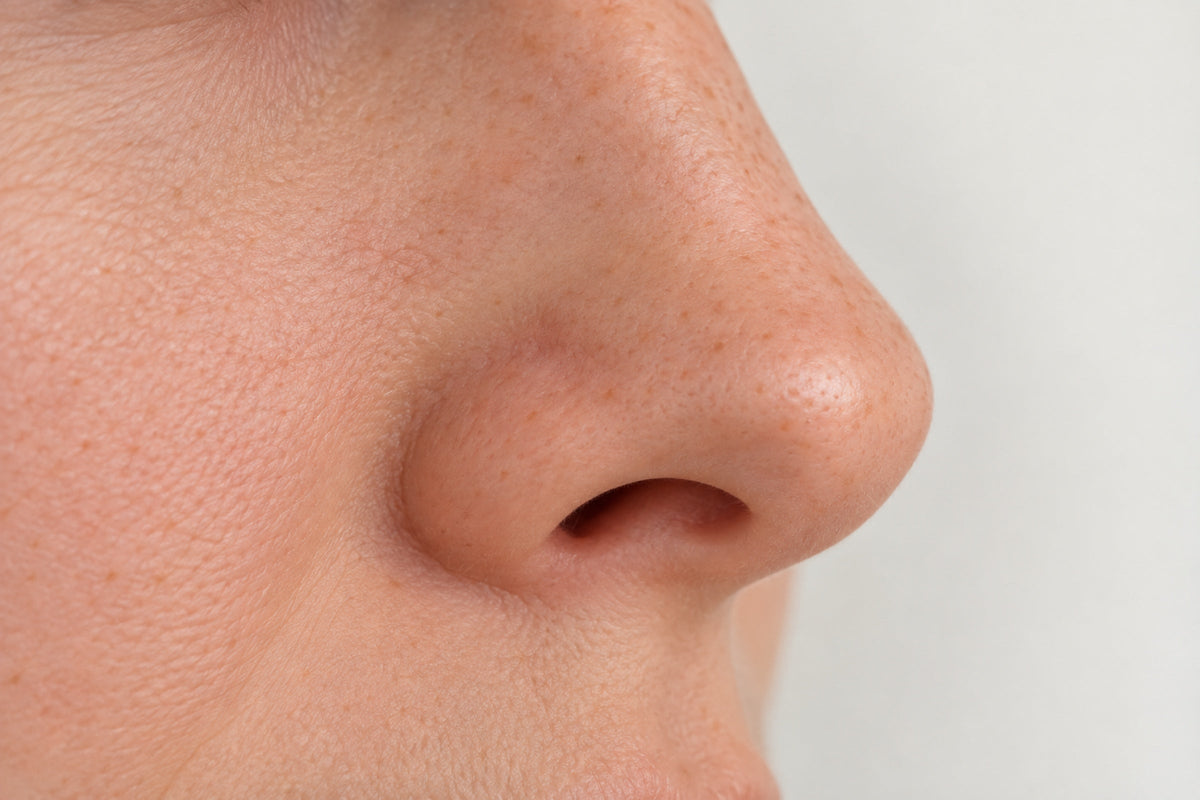
A pore is the opening of a hair follicle, the small channel that holds a hair. Cells lining the channel normally shed while sebum, the oil your skin makes, travels up through it to the surface. When the shed cells and sebum stick together, they can form a plug called a comedone, a bit like grease and lint clogging a drain. Blackheads and whiteheads are two types, and comedones are where "non-comedogenic" gets its name. Bacteria and inflammation also play a part in acne.1
The oily film you feel sits on top of your skin, outside the follicle, so a rich texture doesn't mean more clogged pores. Texture describes how a product feels and spreads, and an oil's thickness and chemistry affect how it flows and spreads.7 Clogging happens inside the follicle, where cells and sebum form the plug.1 The feel of skin-softening ingredients, or emollients, can help you choose a finish you enjoy, and pore-clogging tests are how researchers check what happens inside follicles after an ingredient or formula is applied.2, 8
Why an oil's chemical form matters
Many plant oils carry their fatty acids in groups of three, each attached to one arm of a small three-armed molecule called glycerol. The whole unit is a triglyceride, and which fatty acids it holds helps explain an oil's properties. A free fatty acid is a fatty acid on its own, with no glycerol attached.3 Linoleic acid, for example, can be applied as a free fatty acid or come inside a plant oil's triglycerides, so it helps to know which form a study tested before you read its result.
In a study of people with mild acne, researchers applied linoleic acid to the skin and compared it with the same preparation without it. They sampled material from follicles, including microcomedones, tiny early blockages. After a month, the overall size of the sampled material was about a quarter smaller with linoleic acid, and the preparation without it made no change.6 A quarter in a month is a real shift. It's a change in size, though, and fewer blockages or fewer breakouts would be different results.
How oxidation changes an oil
An oil's chemistry can change when it reacts with oxygen, the same process that turns cooking oil rancid. The process, called oxidation, produces new compounds. In a rabbit-ear study, squalene that had oxidized caused much more pore clogging than fresh squalene.5 So how fresh an oil is can change what it does to pores, at least in rabbit ears.
Squalane is made by adding hydrogen to squalene, which changes its bonds and makes it much more resistant to oxidation. It's made only of carbon and hydrogen, with no fatty acids attached to glycerol, so it isn't a triglyceride at all.4 The article on preservatives and antioxidants explains how antioxidants help protect a blend from oxidation.
What does "non-comedogenic" actually mean?
Some creams that contain oils have passed human pore-clogging tests. One study tested four creams with oils such as avocado, apricot kernel and sunflower oil, applied under patches on men's upper backs.2 In the test, a cream counted as non-comedogenic as long as microcomedone counts rose by less than 50%. All four creams passed, although some individual counts went up, so passing didn't mean nothing changed. The skin was exposed to each cream's full blend of ingredients, at the concentrations each formula used, so the results describe the finished creams rather than any single oil on its own.
Comedogenic ratings come from tests too. A comedogenic rating is a pore-clogging score assigned under particular test conditions, and one widely cited study scored ingredients from zero to five based on changes in rabbit ears. Its methods set both the amount of each ingredient and the material it was mixed with.8 So a well-known pore-clogging number can trace back to a rabbit's ear rather than a human face. Before you lean on a score, check what was tested, at what concentration, and on which skin model.
When you're choosing skincare
For people managing acne, the National Institute of Arthritis and Musculoskeletal and Skin Diseases recommends oil-free cosmetics and products labeled non-comedogenic. It also notes that some people find even these products worsen their acne.9
Start with the institute's recommendation, then weigh a product's test results and how your skin responds:
- Read the test conditions. Check whether the study tested an ingredient or the finished formula, and whether it involved facial use or covered patches on the back.
- Check what changed. Smaller microcomedones, fewer microcomedones, and fewer visible breakouts are different outcomes.
- Pay attention to your skin. Stop using a product that seems to worsen your breakouts, including one labeled non-comedogenic.
How we choose oils for Omnia
Avoiding pore clogging was one of our goals when we formulated Omnia, and we paid particular attention to how well its oils resist oxidation. Squalane makes up the largest share of Omnia's waterless base. We pair it with mixed tocopherols, forms of vitamin E, and rosemary extract, chosen to help slow oxidation in the other oils during storage and use.
The next time you see "non-comedogenic" on a label, ask what was tested, on what skin, and what was counted.
Sources
- National Institute of Arthritis and Musculoskeletal and Skin Diseases. Acne.
- Waranuch N, et al. Safety assessment on comedogenicity of dermatological products containing d-alpha tocopheryl acetate in Asian subjects: A double-blind randomized controlled trial. Contemporary Clinical Trials Communications, 2021. Free full text.
- National Research Council (US) Committee on Diet and Health. Fats and Other Lipids. In: Diet and Health: Implications for Reducing Chronic Disease Risk. Book chapter, National Academies Press. 1989.
- Brunner G, et al. Phase Equilibrium of Hydrogen, Carbon Dioxide, Squalene, and Squalane. Journal of Chemical & Engineering Data, 2009.
- Motoyoshi K. Enhanced comedo formation in rabbit ear skin by squalene and oleic acid peroxides. British Journal of Dermatology, 1983.
- Letawe C, et al. Digital image analysis of the effect of topically applied linoleic acid on acne microcomedones. Clinical and Experimental Dermatology, 1998.
- Douguet M, et al. Spreading properties of cosmetic emollients: Use of synthetic skin surface to elucidate structural effect. Colloids and Surfaces B: Biointerfaces, 2017.
- Fulton JE Jr. Comedogenicity and irritancy of commonly used ingredients in skin care products. Journal of the Society of Cosmetic Chemists, 1989.
- National Institute of Arthritis and Musculoskeletal and Skin Diseases. Acne: Diagnosis, treatment, and steps to take.